Airborne test data
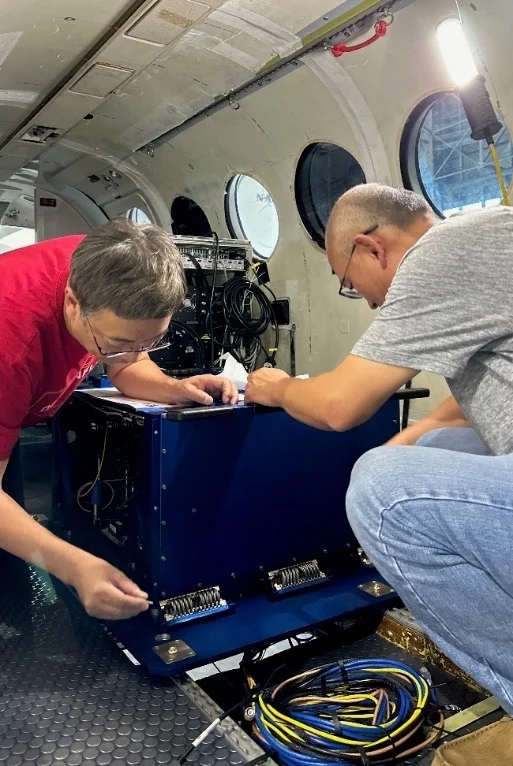
NASA has published its first detailed account of airborne tests of CASALS conducted in November 2024; the illustrated flight over Great Cypress Swamp took place on 12 November. Flying on a B200 aircraft, the prototype produced science-quality data during its first campaign and, from roughly five kilometres up, resolved individual tree branches and subtle terrain changes at 22-centimetre horizontal resolution.
Laser, detector and the next campaign
CASALS combines a compact lidar with machine learning. Instead of heavy moving mirrors, a tunable laser cycles through 256 wavelengths while a diffraction grating directs the pulses to different positions across the flight path. The instrument therefore paints a continuous three-dimensional swath, filling gaps between the narrow tracks sampled by conventional orbital lidars. A detector with a stated 80% quantum efficiency helps capture weak returns from dark surfaces and through dense vegetation.
The team is preparing a wider swath and onboard data processing. Further airborne CASALS tests are planned for the ASCENT campaign in summer 2027. Work towards a space version continues.
Sources
- NASA Science · CASALS technology report · 21 October 2026