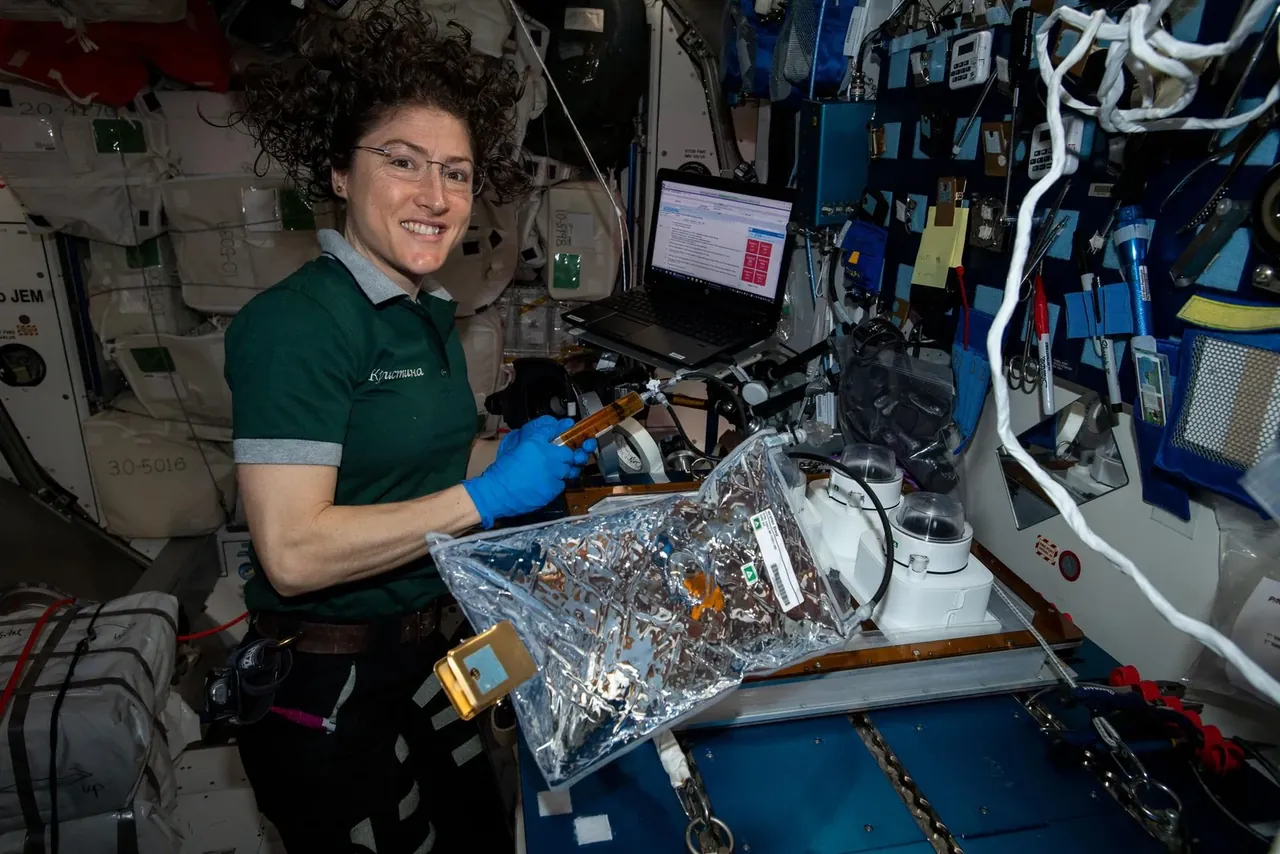
Research for CRS-35
On October 12, NASA detailed four biological investigations planned for SpaceX’s CRS-35 cargo mission to the International Space Station. Lab-grown models of human brain tissue will spend five weeks in orbit before comparison with control samples on Earth. A second experiment will test whether a fungal crop disease becomes faster or more severe in microgravity. A third will evaluate a compact microplate reader for rapid measurement of antibodies, antigens and proteins aboard the station. The fourth and final campaign will continue sampling ISS surfaces to track how antibiotic-resistant bacteria survive and evolve.
The experiments’ preparation stage
The compact biomarker reader is intended to analyse samples on the station. If its test succeeds, crews could obtain some data without returning material to Earth. The plant and bacteria studies examine biological systems in microgravity. NASA’s announcement describes the upcoming mission programme; orbital observations and sample analysis will provide its research findings.
Sources
- NASA Science · SpaceX CRS-35 Mission to Launch Health Research · 12 October 2026