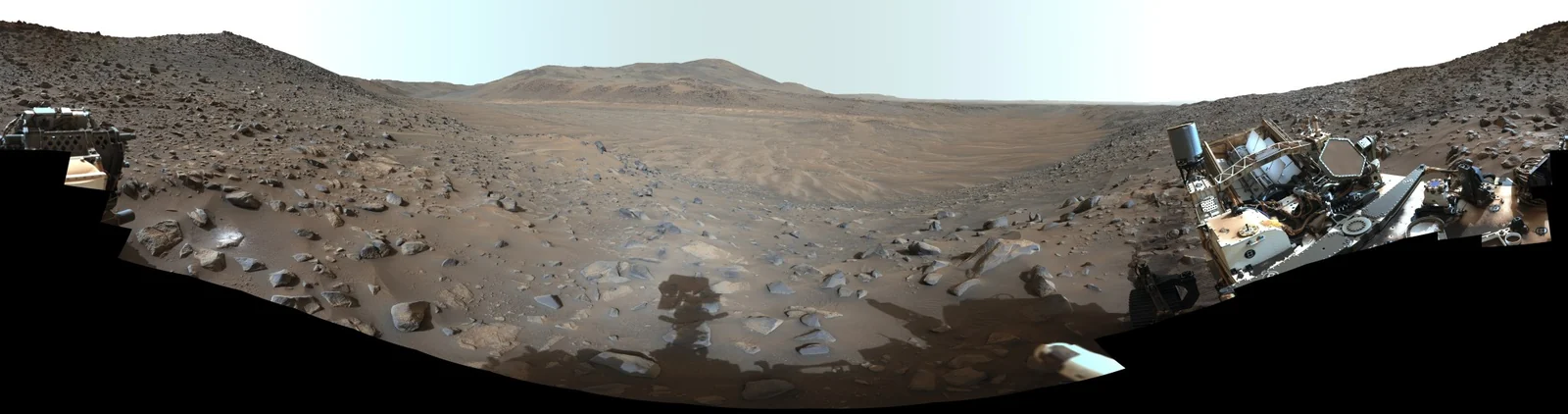
Measuring dust in its natural environment
Perseverance carries samples of materials being considered for future Mars spacesuits. Its PIXL instrument examined dust accumulated on them across 1,645 Martian days. NASA reports the first surface measurements not only of fine particles smaller than 2.5 micrometres but also ultrafine material around 100 nanometres; some particles fell in the 100–300 nanometre range. Accumulation varied with material and electrostatic adhesion, with polymers such as Teflon collecting especially small grains.
From composition to engineering choices
PIXL detected sulphur, chlorine and iron in the dust, along with more silica than is generally found in lunar dust; it also saw signs of phosphorus and calcium sulphate. These observations do not establish a health risk on their own, because risk depends on dose, exposure time and how particles behave inside a habitat. They do, however, allow engineers to compare materials and favour surfaces that retain less dust. For future crews, that evidence can shape suit coatings, external suitports, dual-chamber airlocks and air-filtration systems.
Sources
- NASA — NASA's Perseverance Offers Clues to Protect Crews From Mars Dust · 26 October 2026