Openness is tested by reuse
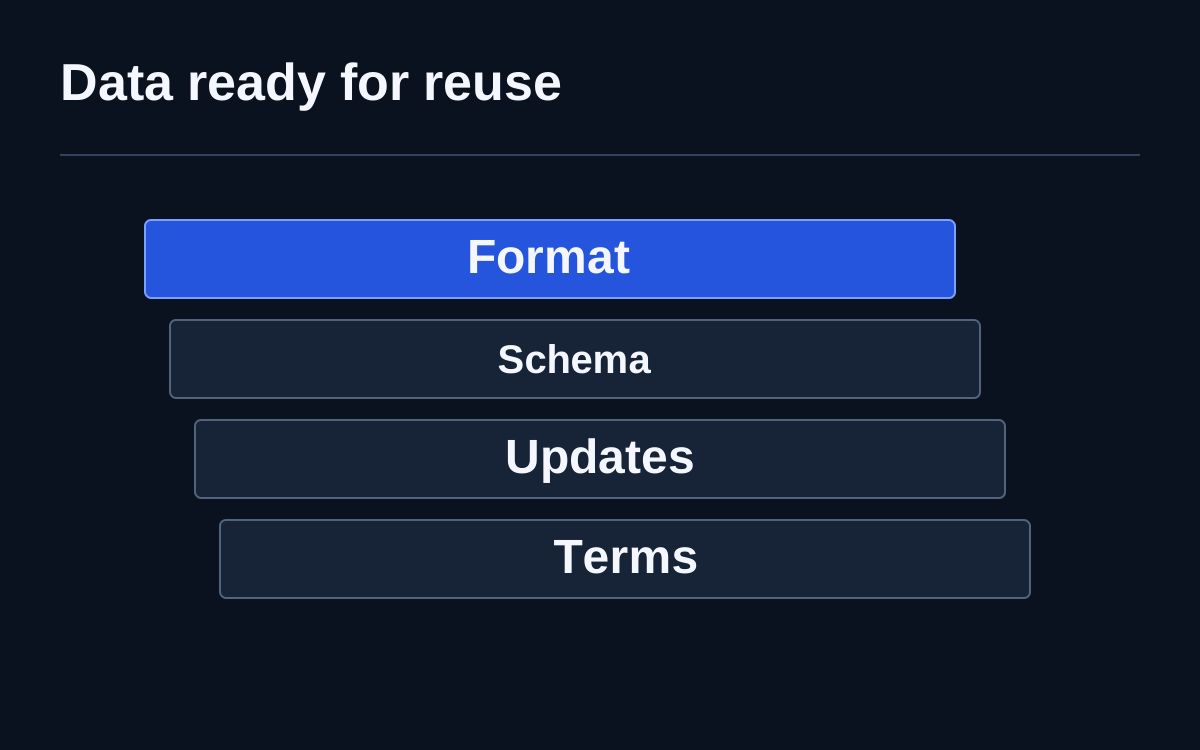
Using a published dataset requires knowing its contents, provenance, update date and terms of use. Without documentation, every new team has to ask the author. Documentation makes it possible to work with the dataset independently.
Imagine places to exercise
Imagine a fictional city dataset of sports facilities with addresses, coordinates and an available field. A developer interprets it as free admission, while the author meant no construction work is underway. The resulting map looks convincing but promises something the source never stated.
A simple field definition resolves part of the problem. A useful route also needs visiting hours, restrictions and verification dates. If these are missing, say so explicitly. Missing information is better than a guess quietly becoming a facility attribute.
Documentation explains rows and gaps
Describe units, allowed values, how the dataset is formed and known exceptions. Coordinates need a reference system and point meaning: entrance, site centre or postal address. Empty values need distinctions between unknown, inapplicable and absent. These details directly affect conclusions.
Add a small valid record and explain a borderline case. A facility might operate seasonally or sit inside an institution. Such a case is more useful than a lengthy general introduction: users can test understanding before applying a rule to every row.
Stability supports dependent services
Fields disappearing without warning can stop an application updating or cause misinterpretation. Material schema changes need descriptions and clear versions. W3C also recommends retaining identifiers: an object's name may change while its reference should remain recognisable.
Distinguish the latest-version address from access to a specific release where provided. Research needs reproducible historical calculations; a map needs fresh information. One continually overwritten file only partly serves the second task and makes historical results harder to explain.
Keep terms and limits nearby
Readers must see the publisher's usage conditions. An unclear description should not be interpreted as permission for every use. The organisation determines appropriate publication contents and checks them before release; a technically accessible export does not remove that responsibility.
Show quality limits too: incomplete coverage, irregular updates and known errors. A map of all facilities and a list of surveyed facilities are different products. If only part of an area was surveyed, users must know before comparing districts rather than after a disputed conclusion.
Test with an unfamiliar reader
Give the dataset and description to somebody uninvolved in preparation. Set a specific task: find operating facilities of a chosen type and explain the answer's reliability. Observe where spoken clarification was needed, links failed or fields were misunderstood.