Describe the bottleneck
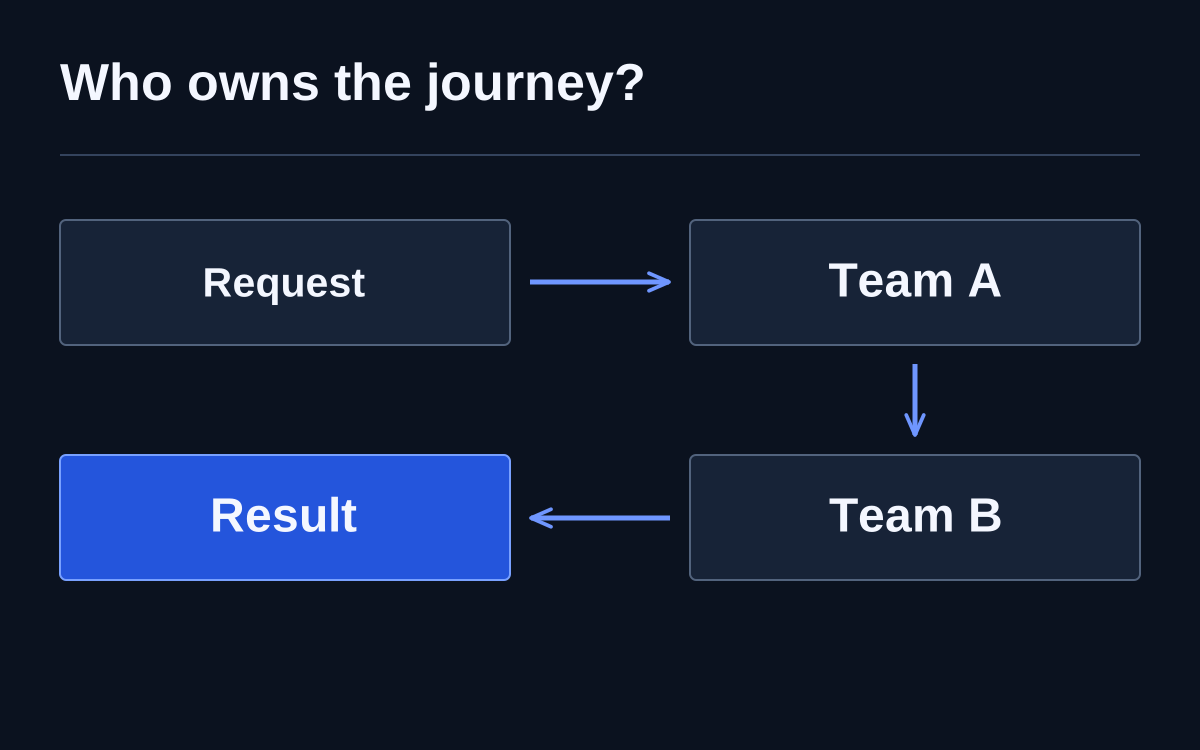
A backlog of requests and repeated transfers between spreadsheets are two visible candidates for automation. Choosing between projects requires a description of inputs, the finished result and exceptions. This makes it possible to compare the workload each project could remove.
Comparing three possible projects
Imagine a company considering weekly-report assembly, incoming-request processing and strategic-presentation drafting. Presentations may provide the most impressive demonstration but are harder to assess: tasks are rare, expectations change and outcomes depend on discussion. Reports are easier to verify against sources, while requests expose volume and delays. Start where the team can distinguish improvement from an attractive illusion.
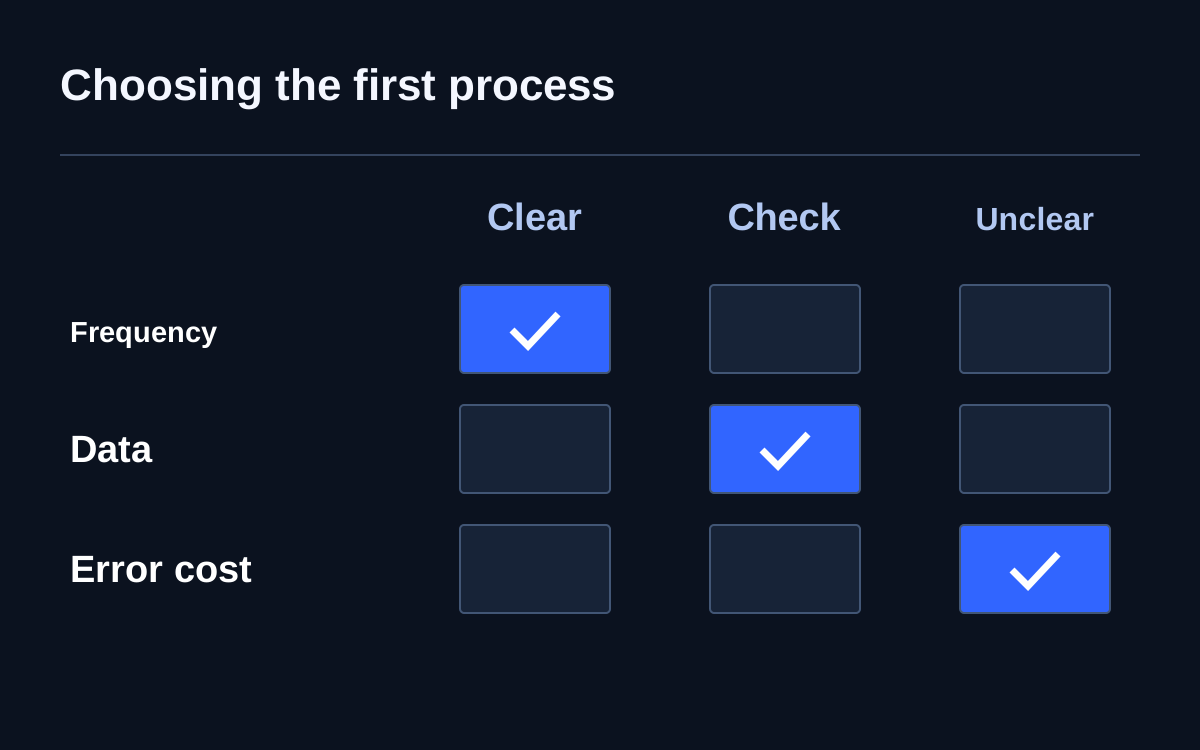
For each candidate, describe frequency, rule stability, data availability, error consequences and implementation effort. There is no need for a precise mathematical ranking with invented weights. A short comparison already reveals unknowns: an unowned source, unavailable sample or undefined current result measure. Resolve those gaps before buying a tool.
Automate a useful outcome
A hypothetical report creates value through a finished summary with agreed metric definitions. Merely moving numbers into an attractive template leaves the problem intact if managers still dispute revenue's meaning. The first step may be agreeing what counts as a sale, removing an unnecessary approval or merging two directories. Software should build on that order; otherwise it reproduces confusion faster.
Describe exceptions separately. A request without an order number, a duplicate customer and an unknown document version should not all become error. Each needs a next step: request information, check a match or involve a specialist. Value depends on the real flow, including awkward cases, rather than a prepared demonstration.
Limiting the first launch
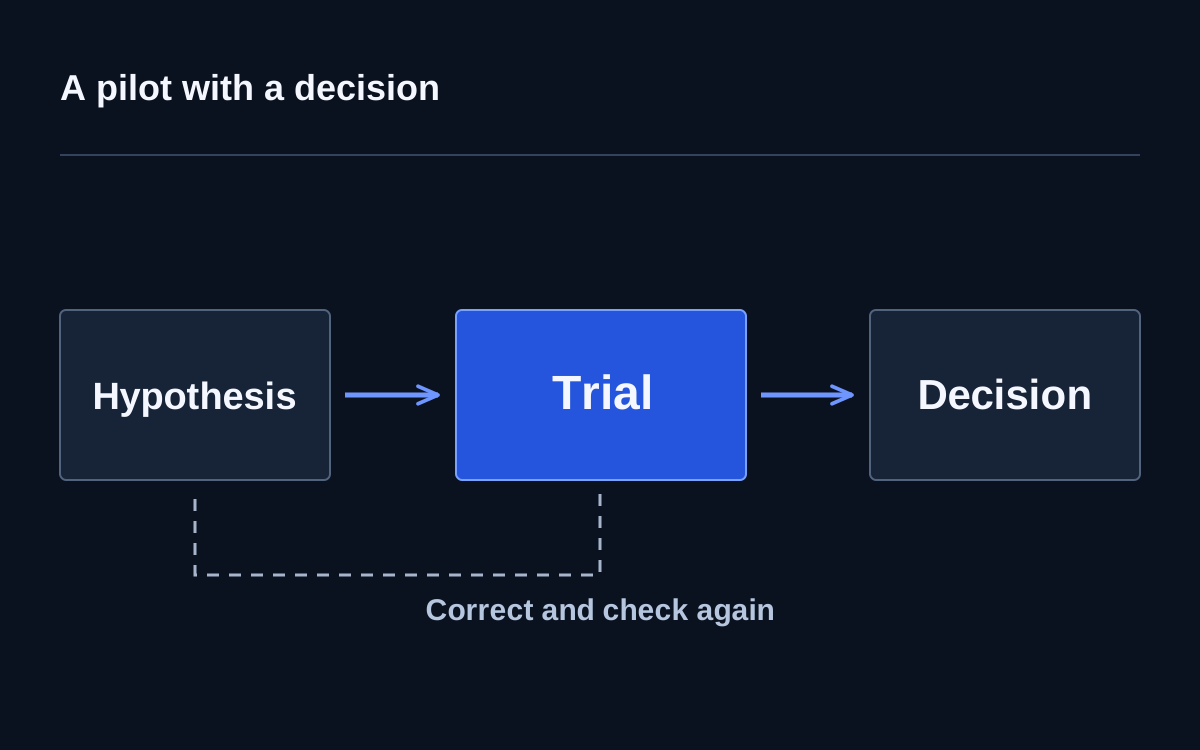
Choose one route and a small group who understand the task. Retain baseline measures and a working manual method. Agree beforehand which pilot data is collected and who investigates errors. When problems appear, the system can change without stopping all work. Pilot scale should match the team's ability to observe and decide.