Notice the gaps
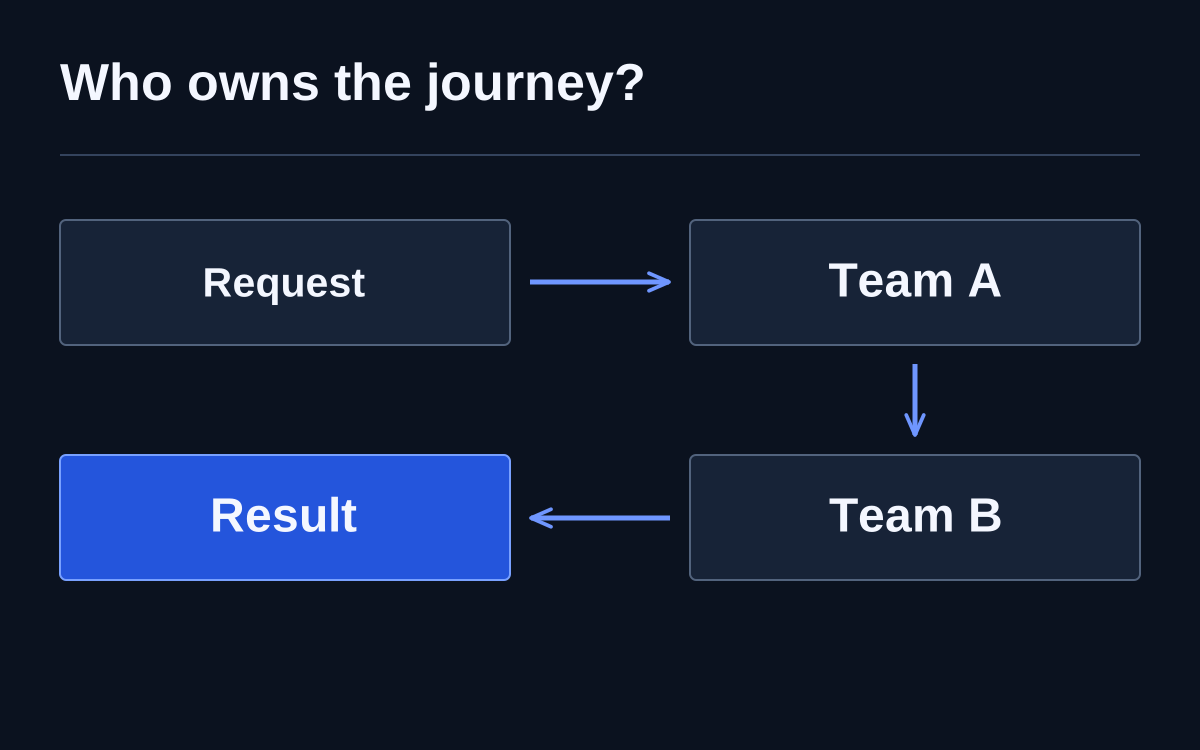
One department prepares the data, another uploads it, and a third finds a mismatch. Each has done its part, but the customer is still waiting. A process owner coordinates these handovers and the outcome of the complete sequence.
The gap is visible from the journey's end
Imagine an equipment delivery. Sales confirmed the order, the warehouse assembled it and accounting issued documents, but dispatch stopped over a wrong address. Each department completed its local task; the customer received nothing. The process owner examines the entire journey and its transition conditions, focusing on the recipient's finished result and why it is delayed.
Reconstruct several real journeys from timestamps: request arrival, data checks, waiting and returns. A department's average may look good while queues accumulate between departments. Start without a huge organisational diagram. One recurring gap already provides a specific topic for agreement and later checking.
Authority matters more than the title
The appointed owner must be able to agree handover rules, priorities and exception handling. Merely collecting reports without discussing changes lets problems recur. The role does not confer authority to override specialists' professional decisions. Separate ownership of the overall route from responsibility for a specific operation's quality so new rules preserve useful checks.
For the delivery example, check addresses before assembly and give tasks with unverified data a separate status. The warehouse sees why it is waiting, sales knows the next step and the customer receives a clear message. This small change removes a repeated work cycle and is easier to verify than an abstract promise to improve cross-functional cooperation.
Seeing whether the role works
Observe total process time, returns between stages and tasks with no clear next action. Track difficult cases separately; they reveal whether participants can agree. A better number achieved by excluding awkward requests is not process improvement. Retain counting rules and flow boundaries with reports to preserve meaningful comparisons.