Define the reader and the action
“Write about automation” leaves the model to choose the reader, subject and level of detail. A manager needs costs and deployment conditions; an engineer needs the design. Naming the audience and intended action immediately narrows the task.
An example brief
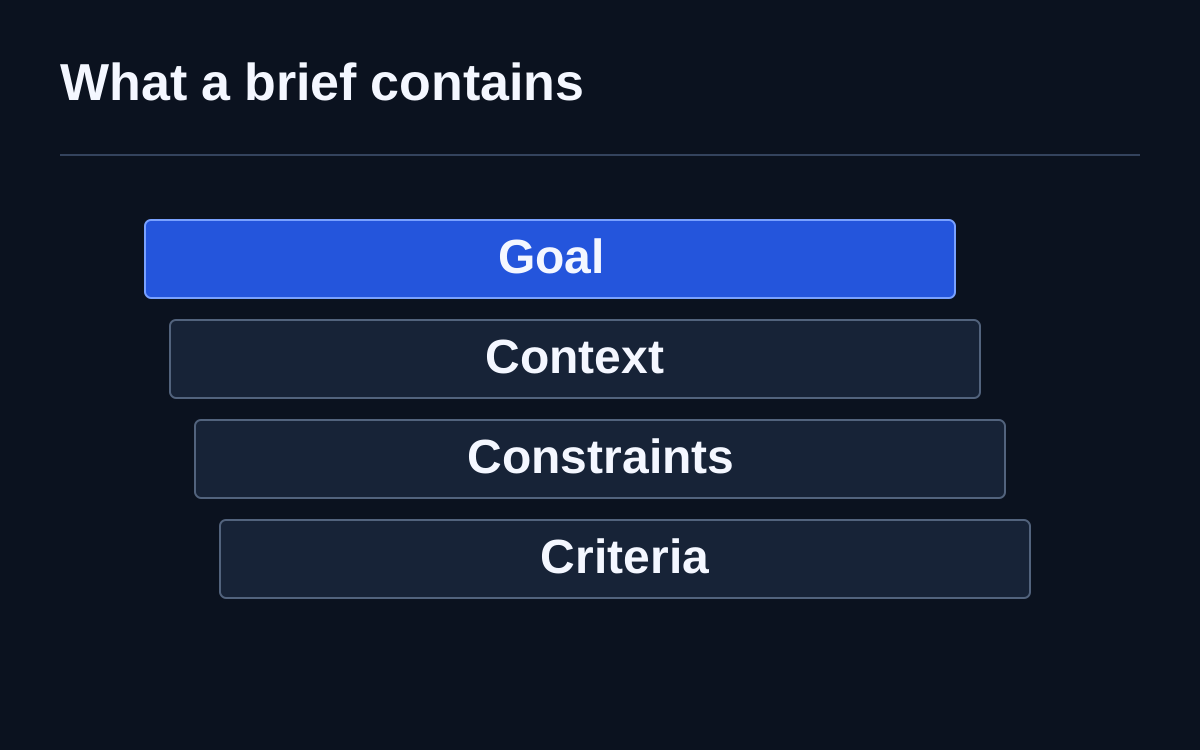
Compare two hypothetical requests. Analyse competitors leaves the model to choose a market, period, criteria and output format. A working brief might instead ask it to compare three named services for export options, access roles and free-plan limitations, using official pages, recording the check date and separating unknowns. The required result and gaps that must not be filled by guesses are then clear.
Context need not be long. Naming the reader, their decision, available materials and constraints is more useful. A manager may need a concise comparison; a developer may need steps to reproduce a fault. The same facts become different documents. Without a goal, extra source pages merely increase the material the model must somehow interpret.
Separate facts from instructions
Distinguish your instructions, document quotations and assumptions explicitly. A third-party page may contain calls to action aimed at its readers rather than your assignment. Describe sources as material to analyse and separately specify what to do with them. Answers should preserve the origin of important information so a reviewer can return to the original.
Provide no more information than the task needs. Checking an email's structure rarely requires an entire customer list; explaining an error may need only an anonymised excerpt. This simplifies reading and reduces unnecessary disclosure. If important information is missing, explicitly permit clarification or a stated gap, so the system need not pretend to be finished at any cost.
Improve the request through results
First test a small part, such as analysing one service against the chosen criteria. If the table is unusable, find the reason: a misunderstood audience, insufficient sources or mixed definitions. Correcting a specific condition is more effective than adding a general demand for quality. Then expand the scope while retaining the same acceptance criteria.