Check the route
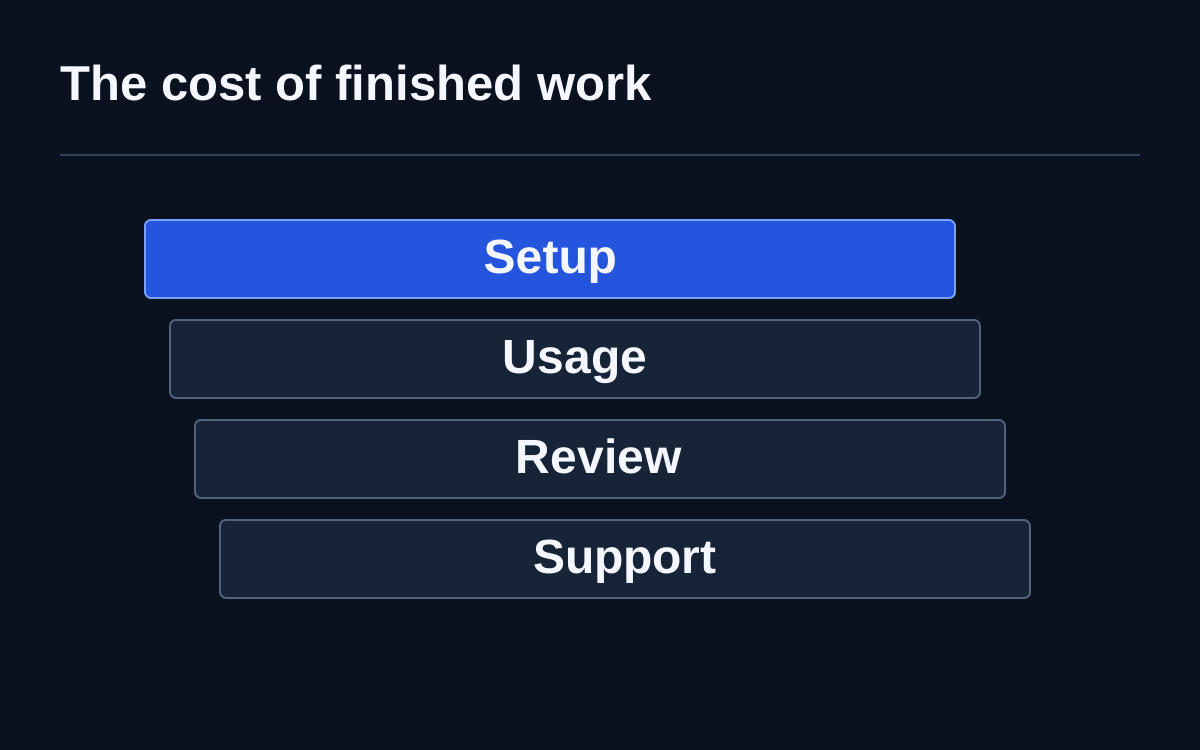
A new service speeds up one operation but adds a login, data transfer and another report. The employee returns to the old method. Understanding why requires following the whole task and counting time spent on handovers.
Why a convenient feature does not become a habit
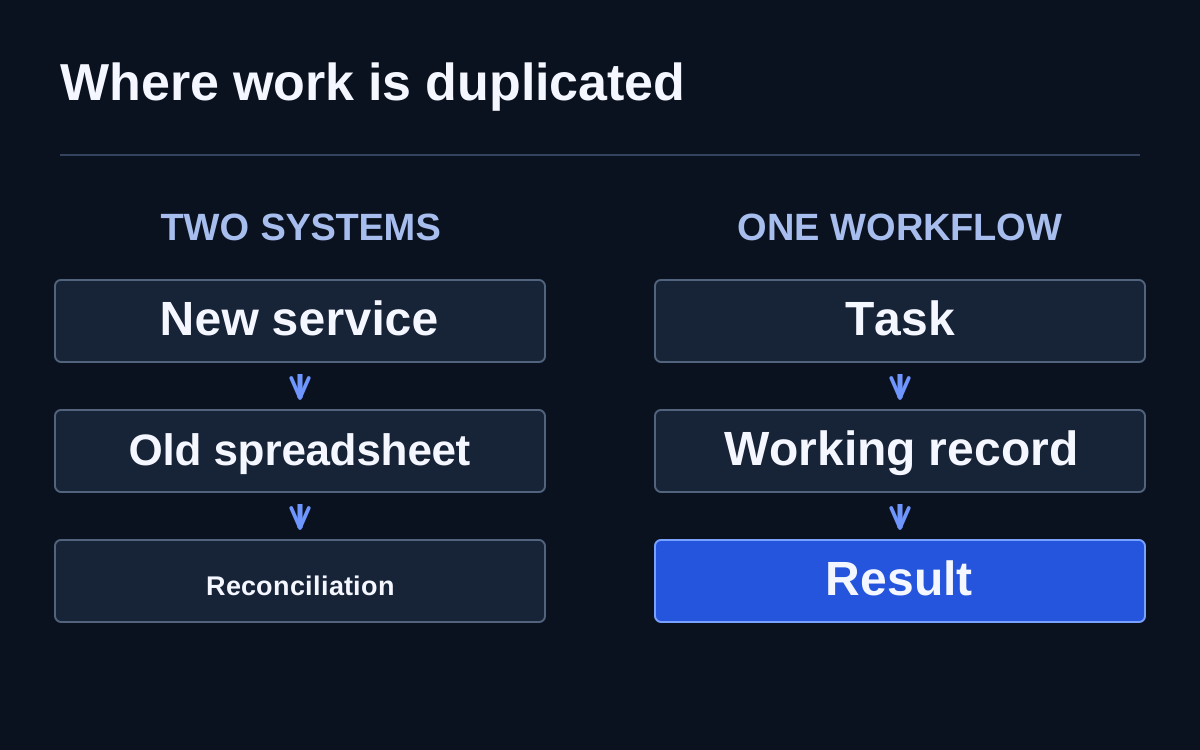
Imagine a new request-management tool. Creating a record is easy, but staff must still duplicate it in a spreadsheet, message a manager and save attachments elsewhere. The feature works, yet the whole day becomes harder. Understand non-use by observing the complete task: where people start, which windows they open, what they retype and how they know they are finished.
Observation is better than a general survey about innovation. Ask for a recent ordinary case and an awkward one. A concrete obstacle often emerges: unclear assignment, missing history or an inability to correct mistakes. Unless fixed, further training merely teaches workarounds, while the familiar spreadsheet remains the more reliable way to finish.
Remove uncertainty around the result
The team needs to know which source is authoritative and when the old method stops being compulsory. If managers still decide from the old report, employees will maintain it regardless of new instructions. Transition requires agreement between participants. Leaving each user to choose between systems and then blaming low activity on them is unhelpful.
Clarify responsibility around AI too: who checks generated text, owns record changes and receives error reports? Unclear expectations encourage employees to redo the work defensively. Good processes make review understandable and proportionate to consequences. Users should be able to reject a poor suggestion without losing completed work or request history.
Measure adoption without theatre
Sign-in counts show activity, not usefulness. Observe the share of suitable tasks completed with the new method, returns to the old one and time spent on workarounds. These observations need not become personal rankings. Their purpose is to find friction and improve the product, not force activity for an attractive implementation report.