A spreadsheet travels without its author
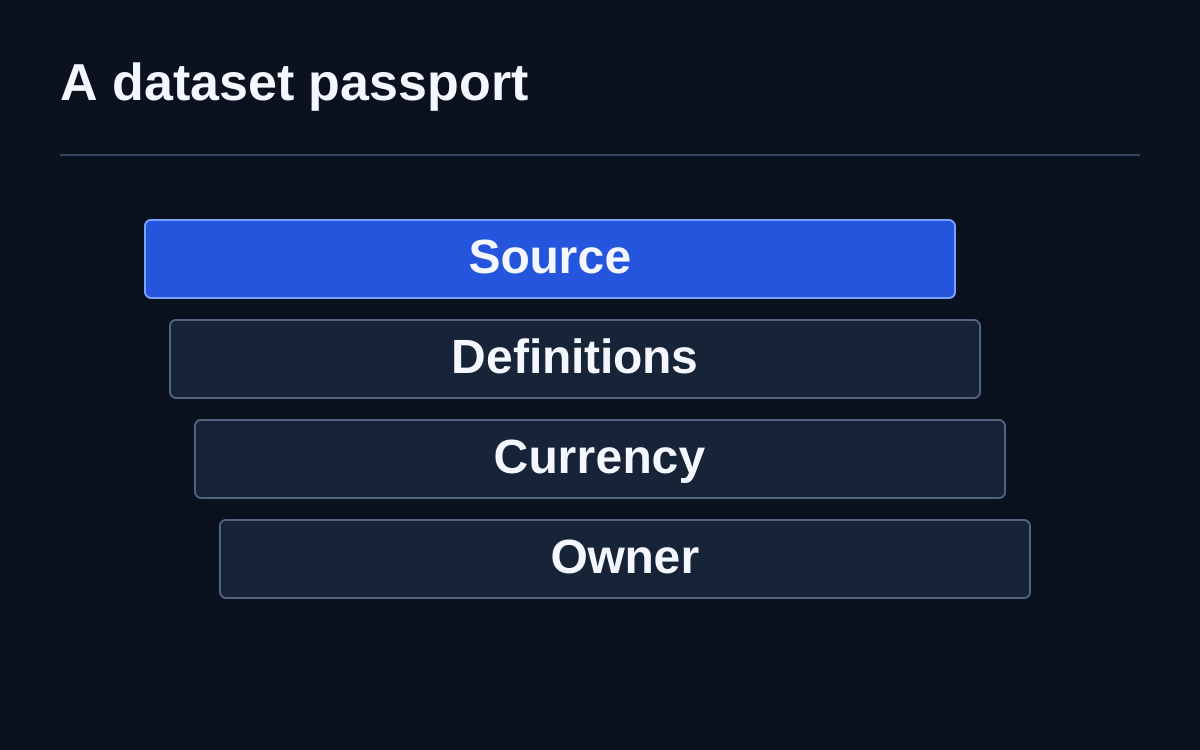
A spreadsheet moves to another team. The handover needs to explain what counts as a customer, why some rows were excluded and which date the export represents. A data passport keeps those definitions alongside the dataset.
Imagine support requests used to measure demand
Consider a teaching example: support sends an analyst a table of product enquiries. The analyst wants to identify the best-selling product. Yet rows arise from problems, repeat questions and clarifications by the same customer. Popularity in support may reflect difficulty of use rather than sales volume.
A passport does not repair that sample, but explains how it was produced. Stating that each row is a request, repeats are included and purchases without enquiries are absent immediately limits the conclusion. The data can study support workload; sales analysis needs another source or an explicitly described combination.
Origin includes transformations
A system name is insufficient: an export may have been filtered, combined and manually corrected. Record the original dataset, covered period and transformations that materially change meaning. If cancelled requests were excluded, future users need to know before comparing it with a report that includes them.
Distinguish the owner of meaning from the person exporting the file. An analyst may prepare it technically without authority to decide which statuses count as completed sales. The card needs a contact who can explain definitions and approve changes, not merely send the document again.
A dictionary prevents silent mistakes
For important columns, specify units, allowed values and missing-value meanings. A blank completion date can mean unfinished work, unknown information or an inapplicable field. Replacing all three with zero simplifies calculation but changes meaning. Amounts including or excluding tax raise the same issue.
A valid example row helps test understanding. Add a borderline case such as a returned request. If two readers classify it differently from the description, the definition is not ready. This quick check is cheaper than debating contradictory charts after a report is published.
Currency involves several dates
File creation time, the source's latest update and the period covered by records may differ. A fresh export of historical information remains historical. The card should answer when it was downloaded, which time the data describes and when the next update is expected.
Record known delays and incomplete coverage separately. One branch may submit records later than others. This does not invalidate the dataset; it helps users choose an appropriate comparison time. Without the note, delayed arrival can be mistaken for a business change.
The passport must change with the dataset
Update the description when fields are renamed, selection rules change or sources are added. Otherwise it becomes another obsolete table. Make reviewing it part of each release and keep a short history of changes affecting interpretation.